
How Pittsburgh’s Freeze Thaw Cycles Damage Foundations and What to Look For
If you live in the Pittsburgh area, you already know winter does not arrive in one clean, simple stretch. It freezes. Then it warms up. Then it rains. Then it freezes again. And by the time late winter turns into early spring, the ground around your house has usually been through that cycle over and over.
That matters more than a lot of homeowners realize.
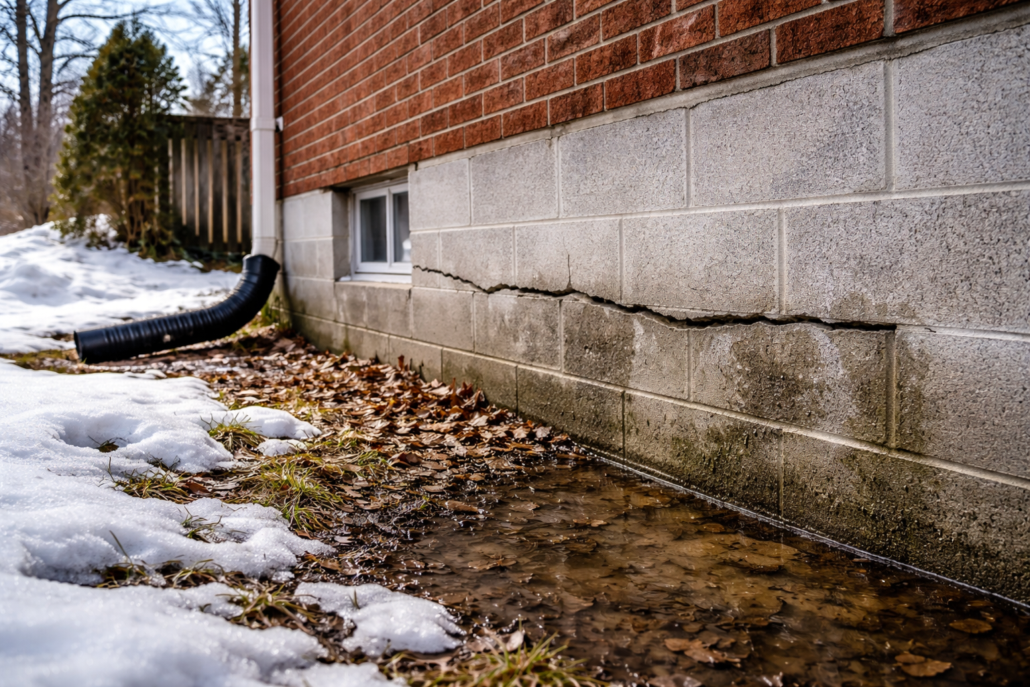
Freeze thaw weather is rough on roads, sidewalks, retaining walls, and masonry. It is rough on foundations too. The basic reason is simple. Water gets into small openings in soil, concrete, masonry, and around the perimeter of a home. When that water freezes, it expands. The repeated freezing and thawing can widen cracks, shift pressure in the surrounding ground, and slowly turn a small weakness into a larger structural issue. The U.S. Geological Survey describes freeze thaw weathering in almost those exact terms, noting that water filling fractures or pores can freeze, expand, and continue widening cracks over time.
For homeowners in Western Pennsylvania, this is not just a theory from a geology textbook. Pittsburgh homes sit in a region with real weather swings, steady precipitation, winter snow, and terrain that often complicates drainage. NOAA climate normals for Pittsburgh International Airport show about 39.61 inches of annual precipitation and 44.1 inches of annual snowfall. Those same normals show winter and shoulder season temperatures that regularly hover around freezing, with average January and February lows below 32 degrees and March and November still cool enough to keep freeze related ground movement in play.
That combination is exactly why foundation issues in this area often start with water and get worse with time.
At Clarity Home Inspections, this is one of the reasons a careful inspection matters so much. Homeowners often assume foundation problems show up dramatically, with huge wall cracks or obvious failure. Sometimes that happens. But more often, the early signs are smaller and easier to miss. A slightly sticking door. A crack that keeps returning after patching. Dampness in a basement corner. Water that seems to pool in the same spot every winter and spring. Those details can tell you a lot before the damage becomes expensive.
This article walks through how freeze thaw cycles affect foundations in the Pittsburgh area, why local conditions make the problem worse, and what homeowners should watch for before small issues become bigger repair projects.
Why freeze thaw weather is hard on foundations
A foundation does not usually fail because of one cold night. Damage tends to build slowly.
The pattern usually starts with moisture. Water may collect against the foundation because of poor grading, short downspouts, clogged gutters, compacted snow, heavy rain, or saturated soil. Once water is present, freezing temperatures change the equation. As water freezes, it expands. That expansion can increase pressure inside cracks and in the soil against the exterior wall. When temperatures rise, the ice melts, the pressure changes, and the cycle starts over again the next time temperatures drop. Over time, repeated movement can open cracks wider, allow more water in, and increase the amount of stress placed on foundation walls.
The ground around the house matters just as much as the concrete or masonry itself. Soil that gets wet and then freezes can heave upward or push laterally. When it thaws, it can settle back unevenly. That movement does not always happen uniformly around the home. One side may stay wetter because of roof runoff. One corner may be colder because of shade. One wall may have backfill that settles differently than the rest. Uneven soil movement is one of the reasons freeze thaw damage can show up as diagonal cracking, wall bowing, floor slope changes, or doors and windows that no longer operate smoothly.
This is also why drainage is such a big deal. The National Association of Home Builders notes that site grading should direct surface water away from the foundation, and references a standard minimum final grade of 5 percent, or a drop of about 6 inches within the first 10 feet, unless drains or swales are used. Penn State Extension also advises reducing soil moisture near a structure by directing runoff away from the foundation, including with gutters, downspouts, and French drains where appropriate.
In other words, freeze thaw damage is rarely just a cold weather problem. It is a moisture management problem first, and a winter stress problem second.
Why this matters so much in the Pittsburgh area
Every region has its own version of foundation risk. In the Pittsburgh area, the risk is shaped by weather, hillsides, older housing stock, and local geology.
NOAA climate data shows Pittsburgh gets meaningful precipitation throughout the year, not just in one season. Summer is wet. Winter is wet. Spring is wet. Snow is part of the picture, but so are rainy stretches and thaw periods that leave the ground saturated. Pittsburgh also averages 44.1 inches of snowfall, which means plenty of opportunities for snowmelt around foundation edges, especially when warmer daytime temperatures follow a freeze.
The timing of freezing weather matters too. The National Weather Service Pittsburgh office said in an April 2026 climate briefing that, on average, the last sub freezing day in the region falls in late April to early May, and its weather story page says average last freeze dates vary from about April 22 to May 6 depending on where you live. That is important because it means freeze risk lingers well into spring, right when snowmelt and seasonal rain are often keeping the soil wet.
Then there is the ground itself. Pittsburgh area geology is not simple. Allegheny County materials describe local rocks as alternating layers of sandstone, shale, and coal. USGS work on landsliding in Allegheny County notes that slope instability is closely tied to rock types, layering, fracturing, permeability of rocks and soils, water seeps, and slope steepness. Another geologic source describing the vicinity of Pittsburgh notes precipitation in the range of about 35 to 45 inches per year along with thick soil cover and interbedded strong and weak sedimentary rocks. Together, those factors help explain why water movement and slope behavior are such recurring concerns in this region.
That does not mean every Pittsburgh house is in danger of major structural movement. But it does mean homeowners here should take drainage, basement moisture, retaining walls, and foundation cracks seriously. The area gives water a lot of opportunities to cause trouble.
Older homes add another layer. Many Pittsburgh area houses were built decades ago. Some have stone foundations. Some have older block or poured concrete walls. Some have had partial repairs over the years, mixed drainage upgrades, patched cracks, replacement downspouts, or basement finishing that can hide evidence. In those houses, freeze thaw problems often do not look new. They look like an old issue that slowly got worse.
What freeze thaw damage actually looks like
A lot of people picture one giant foundation crack running across a basement wall. That can happen, but it is not the only sign.
Sometimes freeze thaw damage starts with small vertical or stair step cracking in masonry. Sometimes it appears as a horizontal crack caused by pressure from saturated soil outside the wall. Sometimes the first visible clue is not in the foundation at all. It is upstairs, where drywall begins cracking near doors and windows because the structure is moving slightly.
HUD inspection standards note that cracked foundations can indicate potential structural failure and specifically mention that issues such as windows and doors not opening or closing can be characteristics of foundation damage. The standards also flag foundation cracks meeting certain size thresholds as deficiencies significant enough to require correction.
In real homes, that means signs often show up in clusters. You may notice one or more of these at the same time:
Cracks in foundation walls or mortar joints. Repeated freeze thaw cycling can widen existing weak points, especially where water is already entering.
Basement dampness or seepage. Moisture intrusion often comes before more obvious structural signs. InterNACHI notes that water intrusion can begin with small cracks that gradually widen and allow groundwater to seep in.
Sticking exterior doors or interior doors that suddenly rub. Slight movement in framing can change the shape of openings enough to affect operation.
Windows that are harder to latch or no longer sit square in the frame. That can point to settlement or racking movement.
Floor slope changes. Sometimes homeowners notice this as furniture sitting unevenly or a rolling object drifting across the floor.
Cracks above doorways or around window corners. These can be from ordinary movement in some homes, but when they are widening or appearing alongside other symptoms, they deserve more attention.
Bowing or leaning basement walls. This is one of the more serious signs and can indicate sustained lateral pressure from surrounding soil and moisture.
Efflorescence, flaking, or surface deterioration on basement walls. While not always structural by itself, it often signals chronic moisture movement through the wall.
Exterior drainage problems. Pooling water, downspouts that discharge too close to the house, settled backfill, and negative grading are not cosmetic issues. They are often part of the cause.
The key point is this: foundation problems are usually not diagnosed by one isolated sign. They are identified by patterns.
The signs Pittsburgh homeowners should pay the most attention to
Because local homes often deal with winter moisture, hillside lots, and older materials, some warning signs deserve extra attention.
The first is recurring water in the basement. If you get damp corners, seepage at the cove joint, musty smells after winter storms, or visible water after snowmelt, do not treat that as normal just because the basement is old. Moisture is one of the main drivers that makes freeze thaw damage worse. Penn State Extension specifically recommends keeping runoff away from the structure to reduce soil moisture near the foundation.
The second is horizontal cracking or inward bowing. Vertical cracks can sometimes be related to shrinkage or modest settlement. Horizontal cracks often suggest lateral soil pressure, which is more concerning. Wet soil, freezing temperatures, and repeated cycles of expansion can all add stress to foundation walls over time. When a wall is not just cracked but moving inward, that usually needs closer evaluation.
The third is stair step cracking in block or brick. This can point to differential settlement or movement in masonry walls. In a Pittsburgh house, especially one with drainage problems outside, that pattern deserves context. Is the crack old and stable, or freshly widening? Is there displacement? Is there water staining nearby? Is there exterior grading or runoff evidence above that area?
The fourth is separation that keeps coming back after cosmetic repair. If a basement crack has been patched repeatedly and continues to reopen, the crack is usually not the main problem. The movement is.
The fifth is a pattern of operation changes in the house. One sticking door is not always a structural problem. But one sticking door, a window that will not latch, and a new drywall crack near a corner all happening together tell a different story.
The last one is drainage failure around the home exterior. This gets ignored all the time. Yet site drainage is often the cheapest place to intervene before major repairs are needed. NAHB guidance points out that proper grading should carry surface water away from the foundation, and EPA related building guidance also emphasizes sloping final grade away from the house and managing roof water discharge away from the structure.
What an inspection can reveal that a casual walk through misses
Homeowners often notice symptoms, but not the pattern behind them. That is where a thorough inspection helps.
A good inspection is not just about spotting cracks. It is about connecting the visible signs to probable causes. For example, a crack in a basement wall means one thing if the downspout above it dumps water one foot from the house. It means something else if the wall is dry, stable, and has no displacement. A slightly sloped floor means one thing in a century old house with no active cracking and something else if it appears next to new wall movement and moisture intrusion.
In a Pittsburgh area home, a careful inspection should look at the structure as a system. That includes visible foundation walls, grading, downspout discharge, signs of settlement, basement moisture, exterior hardscape slope, retaining wall conditions, and how the house sits on the lot.
That matters for buyers and sellers alike.
For buyers, foundation issues are one of the most expensive categories of surprises after closing. The problem is not just the repair bill. It is also the uncertainty. Some cracks are minor. Some indicate movement. Some signal ongoing water management problems that will keep producing damage until the drainage issues are corrected. An inspection helps separate the cosmetic from the significant.
For sellers, catching these problems early can prevent a deal from getting derailed at the worst possible time. Sometimes the most helpful thing a seller can do is address drainage and document the work before listing. A cleaner moisture story and a stable foundation story are easier for buyers to understand.
For current homeowners, inspections are useful even if you are not moving. Freeze thaw damage builds gradually. The sooner you identify contributing conditions, the more options you usually have.
What homeowners can do before next winter
Not every foundation issue is preventable, but many moisture related triggers can be reduced.
Start outside. Make sure gutters are clean and working. Confirm downspouts discharge well away from the house. Look at the soil along the foundation line after a rain. If water sits there, that is a problem. Check whether mulch beds or landscaping have built up against siding or reduced the amount of exposed foundation. Review sidewalks, patios, and driveways near the home to see whether they slope water toward the structure instead of away from it.
Then move to the basement or crawl space. Look for staining, white mineral deposits, damp smells, rust at lower metal components, peeling paint on masonry, and any crack that appears to have changed over time. Pay attention to seasonal patterns. If issues appear mainly in late winter and spring, that is useful information.
Also think about the lot as a whole. On sloped Pittsburgh properties, runoff may be coming from uphill areas, neighboring lots, or retaining wall systems rather than from your roof alone. In that case, the fix may involve broader drainage planning.
What you do not want to do is rely on cosmetic cover ups. Fresh paint, new paneling, or a bead of sealant over a crack does not tell you whether the underlying movement has stopped.
When to stop monitoring and get help
Homeowners often ask where the line is between watch it and act now.
That line gets crossed when you see active movement, repeated moisture intrusion, wall displacement, widening cracks, or multiple symptoms appearing together.
A few examples. If a basement wall is bowing inward, do not just watch it for another winter. If a crack has visible offset, that is more serious than a hairline mark. If doors and windows are changing operation along with new cracking, that deserves attention. If you are seeing basement seepage after storms or snowmelt, especially in the same location every time, that should be evaluated. HUD standards specifically connect cracked foundations and operation problems at doors and windows with possible structural compromise.
And if you are buying a home and notice any of these signs, that is exactly when experienced home inspectors Pittsburgh buyers trust can add real value. The goal is not to create fear. It is to get a clearer picture of condition, likely cause, and what further evaluation may or may not be warranted.
Why local experience matters
Foundation concerns are always easier to understand when the inspector knows the region.
Pittsburgh homes are not just generic houses in a cold climate. They sit in a place with steep grades, variable drainage, older neighborhoods, winter moisture, and geology that can make water behavior less predictable. Allegheny County and USGS materials both point to how strongly slope, permeability, seep conditions, rock layering, and human changes to the site can affect ground stability in this area.
That local context matters because the same crack can mean different things on different lots. A small settlement crack in a flat, dry setting is one story. A similar crack in a damp hillside basement with runoff issues is another.
That is why many homeowners look for pittsburgh area home inspection services that understand local conditions, not just a checklist. You want someone who knows what winter moisture does here, how common older masonry issues can look, and when site drainage may be the real driver behind what is showing up indoors.
The bottom line
Freeze thaw cycles damage foundations in a slow, repetitive way. Water gets in. Temperatures swing. Pressure changes. Soil moves. Cracks widen. Moisture finds new paths. And year by year, what started as a manageable issue can become a major repair.
In the Pittsburgh area, that process is especially important because the region gets steady precipitation, regular snowfall, late season freezes, and terrain that often makes drainage harder to control. NOAA data shows Pittsburgh averages nearly 40 inches of annual precipitation and more than 44 inches of annual snowfall. The National Weather Service also shows freeze risk extending well into spring in this region. Add in local hillsides and layered geology, and it is easy to see why foundations deserve close attention here.
The good news is that foundation issues usually leave clues before they become catastrophic. Cracks, seepage, sticking doors, sloping floors, bowing walls, and poor drainage patterns are all signs worth taking seriously. A careful inspection can help you understand whether you are looking at ordinary age related wear, an active moisture problem, or something that needs further structural evaluation.
For homeowners, buyers, and sellers, that clarity matters. It helps you make better decisions, protect the house, and avoid guessing.
If you are seeing any of those warning signs, working with home inspectors pittsburgh homeowners rely on can give you a much clearer picture of what is happening and what deserves your next step.







Leave a Reply
Want to join the discussion?Feel free to contribute!